
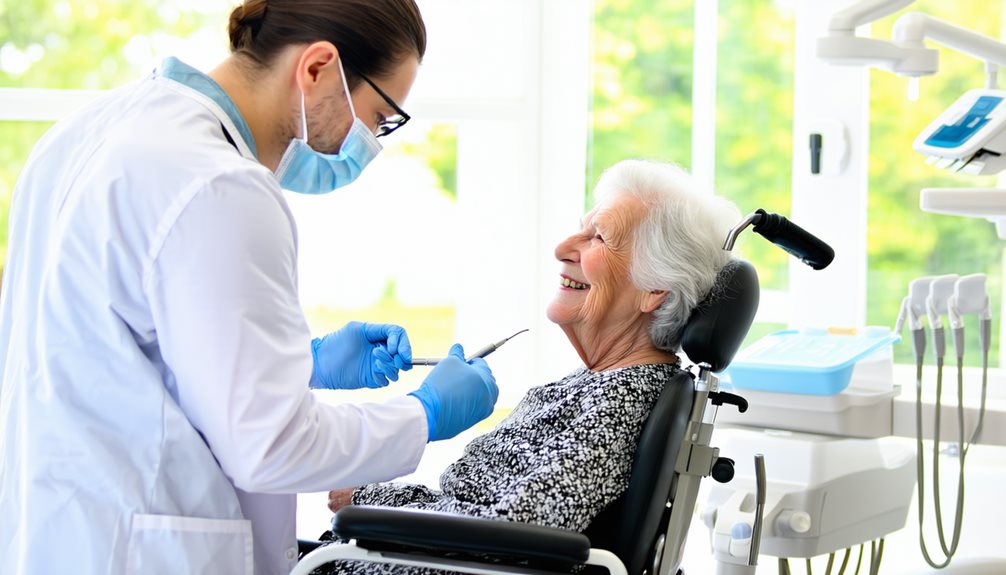
Ensuring wheelchair-friendly senior oral care involves several key components. Accessibility in dental facilities is crucial, including wheelchair ramps and ADA-compliant designs. Specialized equipment, like height-adjustable chairs and ergonomic tools, enhances patient comfort and procedural efficiency. Dedicated training for dental staff on safe transfer techniques and empathetic communication is essential to provide personalized care. Furthermore, adaptive oral care plans, using ergonomic toothbrushes and adaptive flossing tools, empower seniors to maintain oral health independently. Ensuring an environment that prioritizes patient comfort and dignity is integral. Discover more about these essential strategies and their role in enhancing senior dental care experiences.
Accessible Dental Facilities
Ensuring accessible dental facilities is a critical component in providing extensive oral care for seniors who use wheelchairs. The design and layout of dental facilities must accommodate the unique mobility challenges faced by this demographic. Implementing wheelchair ramps is indispensable, ensuring seamless ingress and egress. This not only facilitates physical access but also fosters an environment of inclusivity and dignity for patients.
Accessible signage is another pivotal aspect, guiding patients effortlessly through the facility. Signage should be clearly visible and incorporate intuitive symbols to cater to varying levels of visual acuity and cognitive capacity among seniors. Such innovative approaches in facility design demonstrate a commitment to patient-centered care.
Furthermore, the strategic placement of dental chairs and equipment must allow for unobstructed wheelchair navigation. By prioritizing these architectural elements, dental practices not only adhere to compliance standards but also enhance the overall patient experience.
The integration of these features reflects a forward-thinking approach, ensuring that oral healthcare remains accessible to all, particularly those with limited mobility.
In essence, accessible dental facilities act as a cornerstone in the holistic provision of senior oral care, fostering an environment where innovation meets empathy.
Specialized Equipment Usage
The integration of specialized equipment in oral care for wheelchair-bound seniors greatly enhances accessibility and treatment efficacy.
Height-adjustable dental chairs and accessible dental tools are pivotal in accommodating various mobility constraints, ensuring comfort and safety during procedures.
In addition, portable oral hygiene devices empower seniors to maintain peak oral health with greater autonomy and convenience.
Height-Adjustable Dental Chairs
Incorporating height-adjustable dental chairs into dental practices can greatly enhance accessibility for wheelchair-bound seniors, promoting an inclusive and patient-centered approach to oral care.
These innovative chairs are equipped with height adjustable designs and ergonomic features, allowing for ideal positioning and comfort for both the patient and dental practitioner. By facilitating seamless shifts from wheelchair to dental chair, these systems minimize the risk of injury and guarantee a dignified experience for seniors who may face mobility challenges.
The clinical benefits of height-adjustable dental chairs include:
-
Ergonomic Features: Tailored to reduce physical strain, these chairs provide support that can alleviate discomfort during prolonged procedures, benefiting both patients and dental professionals.
-
Precise Adjustability: The ability to fine-tune chair height and angle accommodates various wheelchair models, assuring that all patients receive consistent and high-quality care.
-
Enhanced Stability: These chairs are designed to stabilize patients securely, reducing anxiety and promoting a calm and reassuring clinical environment.
-
Space Efficiency: The compact design of height-adjustable chairs allows for efficient use of practice space, facilitating ease of movement for practitioners and caregivers alike.
This integration of advanced equipment underscores a commitment to progressive, empathetic patient care, essential in meeting the nuanced needs of the senior population.
Accessible Dental Tools
Building on the enhanced accessibility offered by height-adjustable dental chairs, adopting accessible dental tools further advances oral care for wheelchair-bound seniors.
The integration of ergonomic toothbrushes is pivotal in this situation. These devices are designed with user-friendly handles and angled bristles to accommodate reduced dexterity often observed in elderly patients. Such toothbrushes not only improve grip but also enhance the efficiency of plaque removal, promoting thorough oral hygiene.
In parallel, adaptive flossing tools serve as an invaluable asset in maintaining interproximal cleanliness. Traditional flossing can be particularly challenging for seniors with limited hand mobility or coordination.
Adaptive flossing devices, featuring extended handles and pre-threaded floss, mitigate these difficulties, ensuring effective interdental cleaning. By minimizing strain and maximizing reach, these tools empower users to uphold their oral health independently.
Moreover, these innovative dental tools are crafted from materials that prioritize patient comfort, minimizing potential irritation to sensitive gums.
The utilization of accessible dental tools is a reflection of the commitment to inclusive healthcare, acknowledging the unique needs of wheelchair-bound seniors.
Portable Oral Hygiene Devices
For wheelchair-bound seniors, portable oral hygiene devices represent a significant advancement in maintaining oral health outside traditional settings.
These innovations are vital in enabling autonomy and enhancing quality of life by providing effective oral care solutions tailored to the unique needs of seniors with limited mobility. Portable devices are designed with ergonomic features and compactness, ensuring ease of use and accessibility.
-
Compact Toothbrushes: These are engineered with foldable handles and replaceable heads, offering both convenience and hygiene. Their design allows for effortless manipulation, even with limited hand dexterity.
-
Travel Mouthwash: Formulated for on-the-go use, travel mouthwash comes in single-use packets or compact bottles, eliminating the need for bulky containers. It helps maintain oral freshness and hygiene without requiring a sink.
-
Portable Water Flossers: Lightweight and battery-operated, these devices offer a thorough interdental cleaning option, which is essential in preventing periodontal disease for seniors who may struggle with traditional flossing.
-
Mobile Suction Units: These are necessary for seniors with swallowing difficulties, providing safe and effective removal of oral debris and secretions, thereby preventing aspiration risks.
These innovations highlight the commitment to delivering extensive oral care solutions that accommodate the diverse needs and preferences of wheelchair-bound seniors.
Trained Dental Staff
In the domain of wheelchair-friendly senior oral care, the role of trained dental staff is paramount, as it encompasses specialized accessibility training that guarantees a seamless experience for patients with mobility challenges.
Dental professionals are equipped with personalized care techniques that address the unique needs of each senior patient, fostering a compassionate and respectful environment.
This specialized training not only enhances the efficiency of care delivery but also greatly contributes to the overall well-being and comfort of senior patients.
Specialized Accessibility Training
Effective delivery of dental care to wheelchair-bound seniors necessitates specialized accessibility training for dental staff. This training is pivotal in guaranteeing that care is not only clinically effective but also empathetically tailored to meet the unique needs of this demographic.
Emphasis on inclusive communication strategies allows dental professionals to engage meaningfully with patients, fostering an environment of trust and comfort. Furthermore, adaptive learning methods equip staff with the skills to accommodate various physical and cognitive capabilities, enhancing care delivery.
Training should focus on the following key areas:
-
Patient Transfer Techniques: Mastery of safe and efficient wheelchair transfer methods to prevent injury and maintain patient dignity.
-
Customized Equipment Use: Familiarity with dental tools and equipment that can be adapted or modified for use with wheelchair-bound patients, enhancing procedural efficiency and comfort.
-
Environmental Adjustments: Strategies for modifying the dental office layout to facilitate ease of access, reducing physical barriers that hinder patient movement.
-
Empathetic Communication: Developing skills in non-verbal and verbal communication to guarantee patients feel heard and respected, thereby promoting patient-centered care.
Personalized Care Techniques
Building upon the foundation of specialized accessibility training, personalized care techniques empower dental staff to address the specific needs of wheelchair-bound seniors with precision and empathy.
By implementing individualized assessments, dental professionals can tailor their approach to each patient, ensuring that unique oral health challenges are met with innovative solutions. These assessments involve a thorough evaluation of the patient’s dental history, mobility limitations, and any underlying medical conditions that may impact oral health.
Customized hygiene protocols are integral to this personalized approach. Dental staff are trained to modify traditional oral care routines to accommodate the physical constraints of wheelchair users, ensuring effective plaque removal and maintenance of oral hygiene. This might involve the use of adaptive tools, such as specialized toothbrushes or flossing aids, designed to enhance accessibility and ease of use for seniors.
Moreover, ongoing education and training in empathetic communication are essential.
This commitment to personalized care not only enhances patient satisfaction but also optimizes clinical outcomes, promoting a higher standard of oral health for wheelchair-bound seniors.
Tailored Oral Care Plans
A thorough oral care plan tailored for wheelchair-bound seniors is essential to address their unique dental needs and improve their overall quality of life. This approach requires careful consideration of the physical and cognitive limitations that may accompany aging and mobility challenges.
Customized cleaning routines are paramount, designed to accommodate individual needs and promote effective oral hygiene.
To guarantee extensive care, consider the following components:
-
Assessment of Oral Health****: Conduct a detailed examination of the senior’s oral cavity, identifying any specific conditions such as periodontal disease, xerostomia, or prosthetic requirements.
-
Customized Cleaning Techniques****: Develop individualized cleaning strategies that align with the senior’s dexterity and mobility, possibly incorporating adaptive tools for enhanced accessibility.
-
Nutritional Counseling: Provide guidance on dietary choices that support oral health, considering any swallowing difficulties or nutritional restrictions the senior may face.
-
Regular Follow-Up Visits: Schedule consistent check-ups to monitor oral health progress and make necessary adjustments to the care plan, guaranteeing ongoing adaptation to changing needs.
Transportation and Parking Solutions
How can transportation and parking solutions be optimized to better serve wheelchair-bound seniors seeking oral care? Addressing transportation challenges requires a multifaceted approach, integrating both innovative technology and empathetic urban planning.
Wheelchair-bound seniors often face considerable barriers, from the lack of reliable transportation options to insufficient parking accessibility near healthcare facilities. A tailored transport infrastructure can mitigate these obstacles by leveraging advancements in adaptive transit vehicles equipped with wheelchair lifts and securement systems.
Additionally, partnerships with ride-sharing services that offer wheelchair-accessible vehicles can enhance mobility options, ensuring timely access to oral care appointments.
Parking accessibility is another critical factor. Designing parking facilities with adequate accessible spaces, compliant with the Americans with Disabilities Act (ADA), is essential. These spaces should be strategically located near facility entrances to minimize travel distances for wheelchair users.
Furthermore, digital solutions such as mobile apps that indicate real-time availability of accessible parking can greatly assist in planning visits. Implementing smart technologies that allow pre-booking of parking spaces can also alleviate logistical burdens.
Ultimately, a thorough strategy that combines transportation innovations with enhanced parking facilities can greatly improve access to necessary oral healthcare for wheelchair-bound seniors, fostering both independence and dignity.
Patient Comfort and Support
Guaranteeing patient comfort and support for wheelchair-bound seniors during oral care appointments involves addressing both physical and emotional needs. Properly executed, this guarantees a positive experience, fostering patient reassurance and reducing anxiety.
Comfort techniques must be tailored to accommodate unique challenges associated with mobility limitations. This requires a thorough approach, integrating innovative solutions that prioritize ease and dignity.
-
Adjustable Dental Chairs: Utilizing dental chairs with adjustable features allows for seamless shifts from wheelchairs, minimizing physical exertion and enhancing comfort. Such equipment should be easily adaptable to the patient’s height and positioning needs.
-
Ergonomic Headrests and Cushions: Providing specialized cushions and headrests designed to support different postures can greatly alleviate discomfort. These accessories guarantee stability and can be customized to individual anatomical needs.
-
Communication and Patient Reassurance: Clear, empathetic communication is essential. Employ verbal comfort techniques by explaining procedures in a reassuring manner, thereby reducing apprehension and creating a calming environment.
-
Environmental Considerations: A soothing atmosphere, including appropriate lighting and ambient sounds, contributes to patient relaxation. Incorporating sensory-friendly elements can further enhance the overall experience, addressing both physical and emotional comfort.
Incorporating these strategies not only supports patient well-being but also reflects a commitment to innovation and empathy in senior oral care.
Frequently Asked Questions
How Do Insurance Plans Cover Wheelchair-Friendly Dental Care for Seniors?
Insurance coverage for wheelchair-accessible senior dental care often includes specialized dental benefits, addressing accessibility needs. Policies vary, and patients should consult their provider to guarantee thorough coverage for adaptive equipment and services enhancing oral care accessibility and quality.
Are There Home Dental Care Options Available for Wheelchair-Bound Seniors?
Home care for wheelchair-bound seniors can be enhanced through adaptive tools like specialized toothbrushes and flossing devices. These innovations facilitate oral hygiene, ensuring accessibility and comfort, while promoting patient autonomy and maintaining oral health integrity.
What Are Some Financing Options for Wheelchair-Accessible Dental Renovations?
To finance wheelchair-accessible dental renovations, consider exploring grants programs designed for accessibility improvements. Additionally, renovation loans tailored for healthcare facilities offer financial support, ensuring compliance with accessibility standards and fostering an innovative, inclusive environment for senior oral care.
How Can Caregivers Assist in Ensuring Regular Dental Visits for Seniors in Wheelchairs?
Caregivers can enhance regular dental visits for seniors in wheelchairs by coordinating transport assistance and utilizing appointment reminders. This approach integrates logistical support with empathetic care, ensuring accessibility and compliance with dental health protocols.
What Emergency Dental Care Services Exist for Wheelchair Users?
Emergency dental care services for wheelchair users prioritize accessibility, offering specialized equipment and trained personnel to accommodate physical limitations. Innovations include mobile dental units and adaptable treatment spaces, ensuring prompt, compassionate care tailored to mobility-impaired patients’ needs.
Conclusion
Ensuring wheelchair-friendly senior oral care necessitates the integration of accessible dental facilities and specialized equipment. Dental staff require training to address the unique needs of wheelchair-bound seniors, while personalized oral care plans enhance treatment efficacy. Transportation and parking solutions must be considered to facilitate access to care. Prioritizing patient comfort and support fosters a compassionate environment, ultimately improving oral health outcomes for this population. Thorough strategies are essential for addressing the multifaceted challenges faced by wheelchair-using seniors in dental care.

